AC replacement in Austin
AC Replacement Austin replaces central air conditioners, heat pumps, gas furnaces, ductless mini-splits, and ductwork for homeowners in Austin and the towns around it. We size each new system to your house with a load calculation that works out its cooling and heating needs, and you get options in writing before any work starts.
What we replace
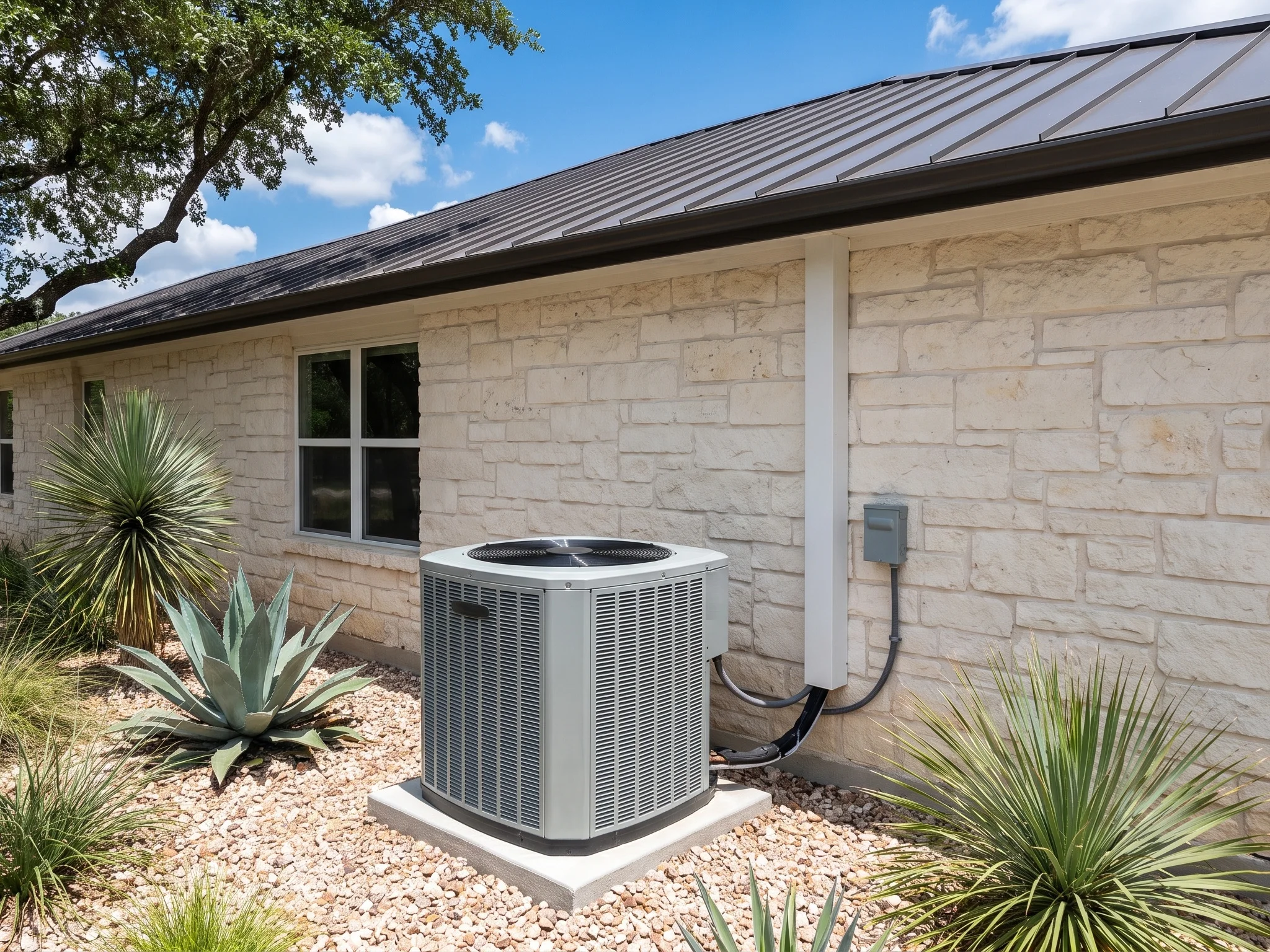
Most of our jobs start with a system that’s old, failing, or keeps needing repairs. We replace the outdoor unit and indoor coil or air handler as a matched pair, and replace the ducts too when they’re part of the problem.
AC replacement
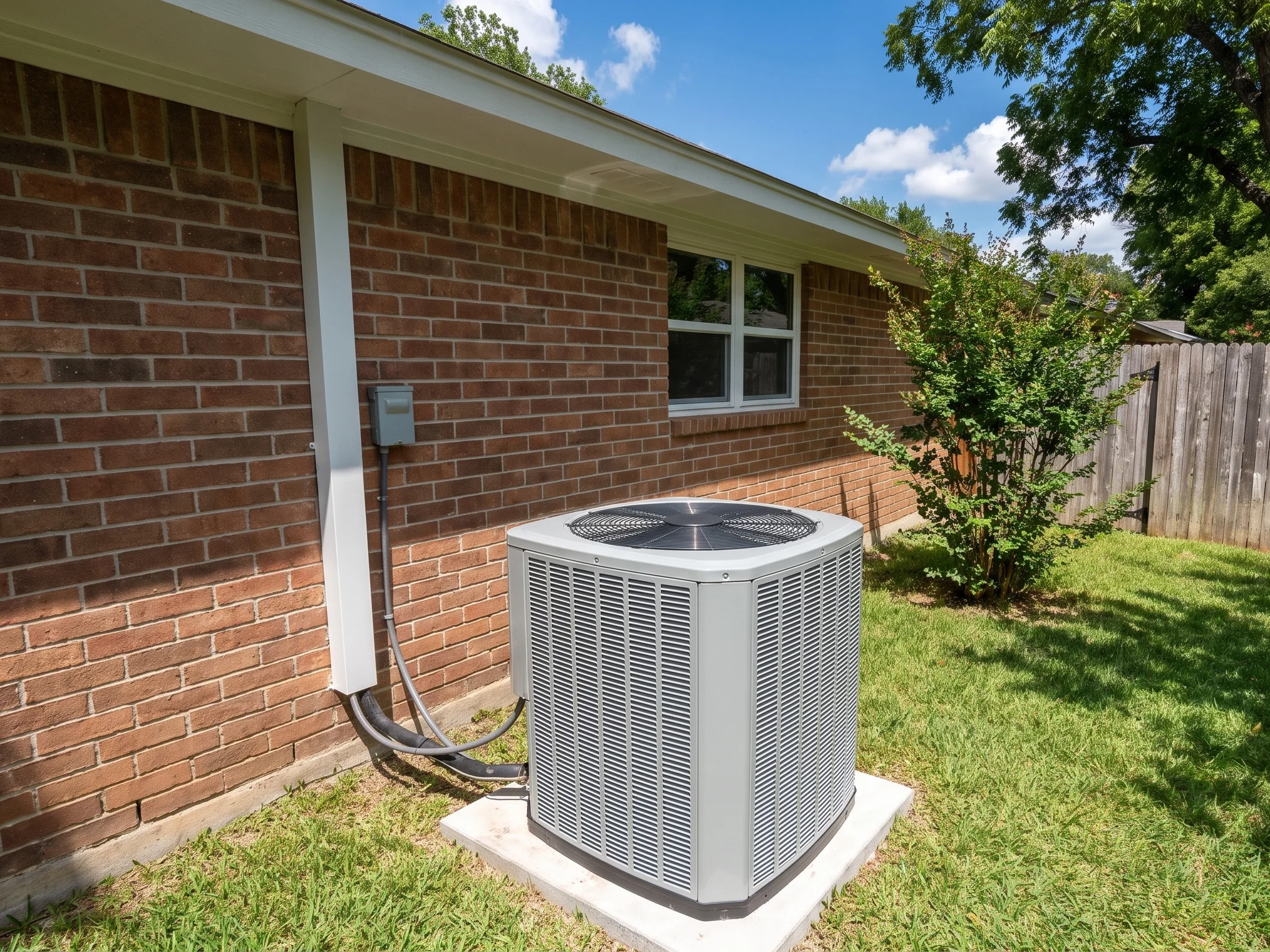
A new outdoor condenser gets a matched indoor coil, and we check, flush, or replace the refrigerant lines.
Heat pump replacement
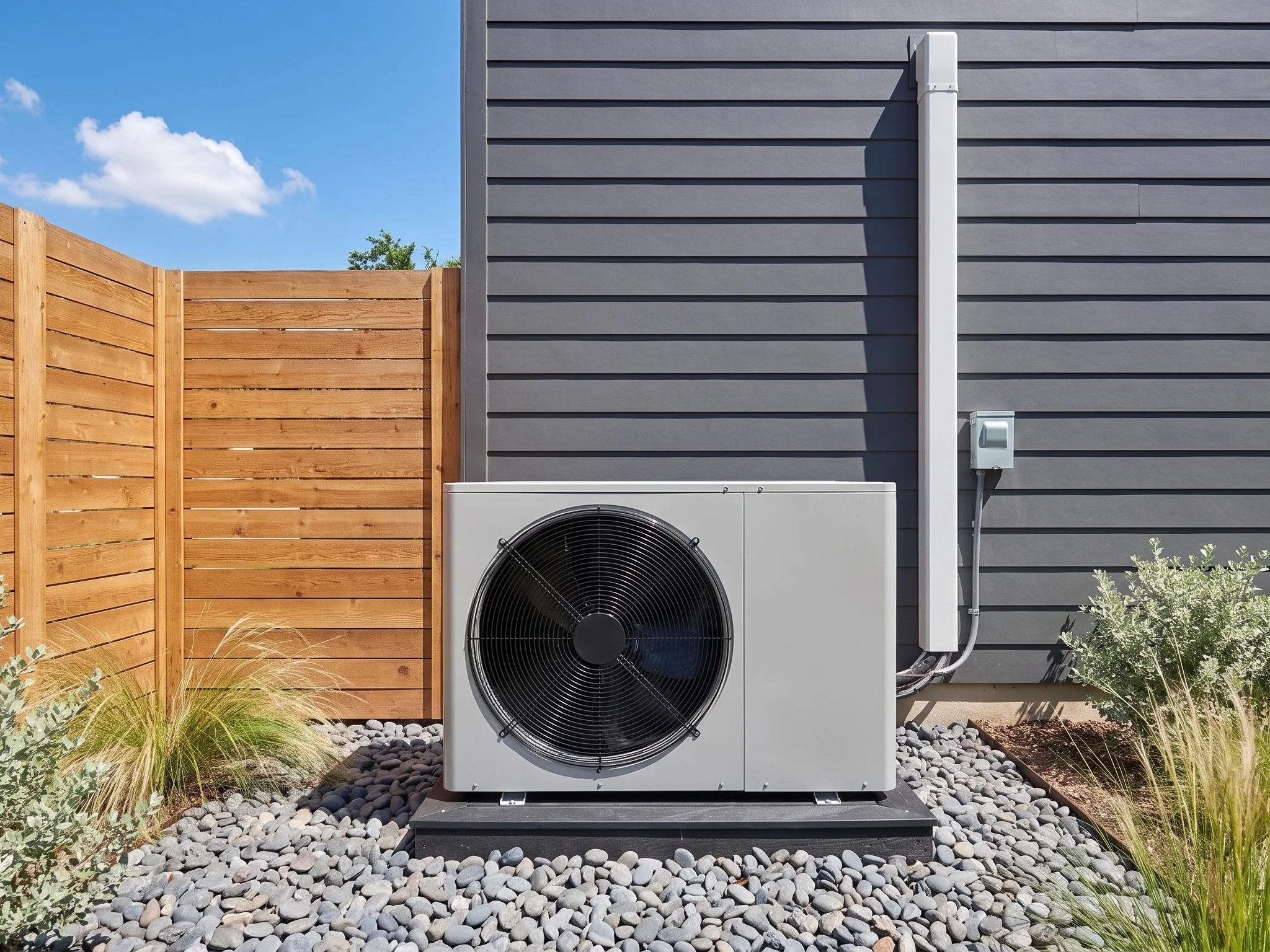
We pair one outdoor unit that cools in summer and heats in winter with a new indoor air handler.
Furnace replacement
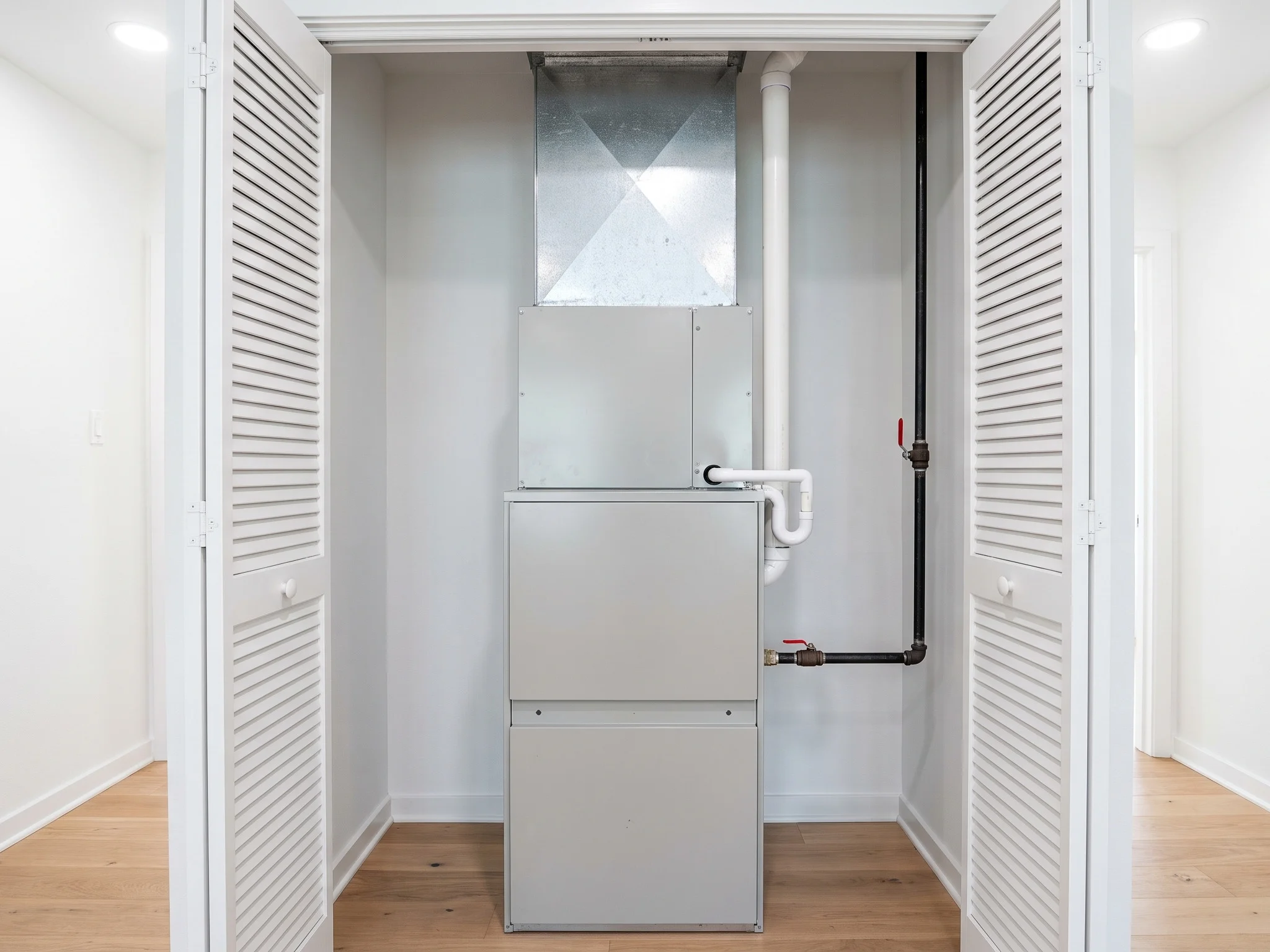
Gas and electric furnaces in closets and attics are usually replaced along with the AC coil on top.
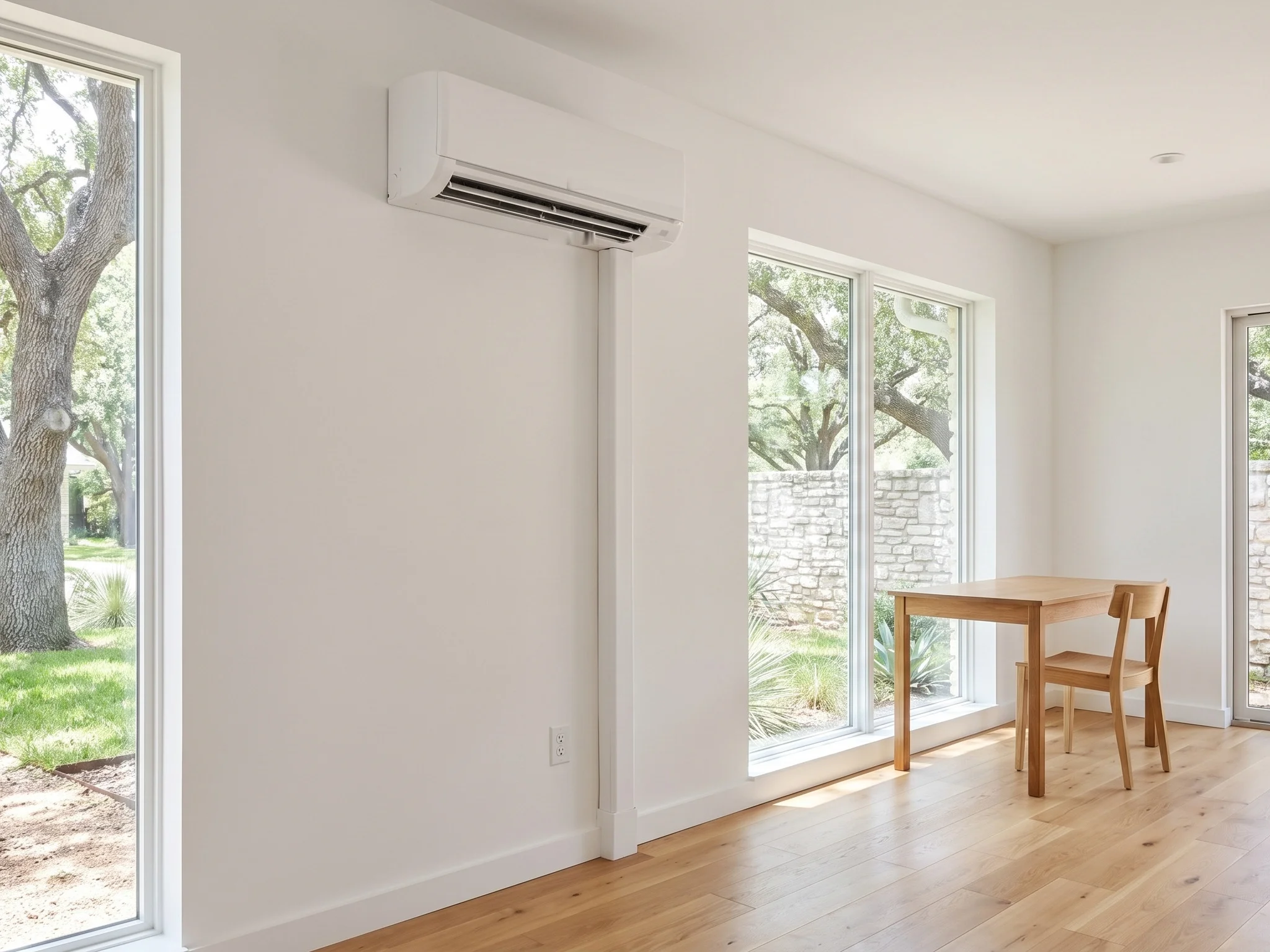
Mini-split installation
We install ductless heads for rooms the ducts don’t reach, including garage conversions, additions, sunrooms, and backyard studios.
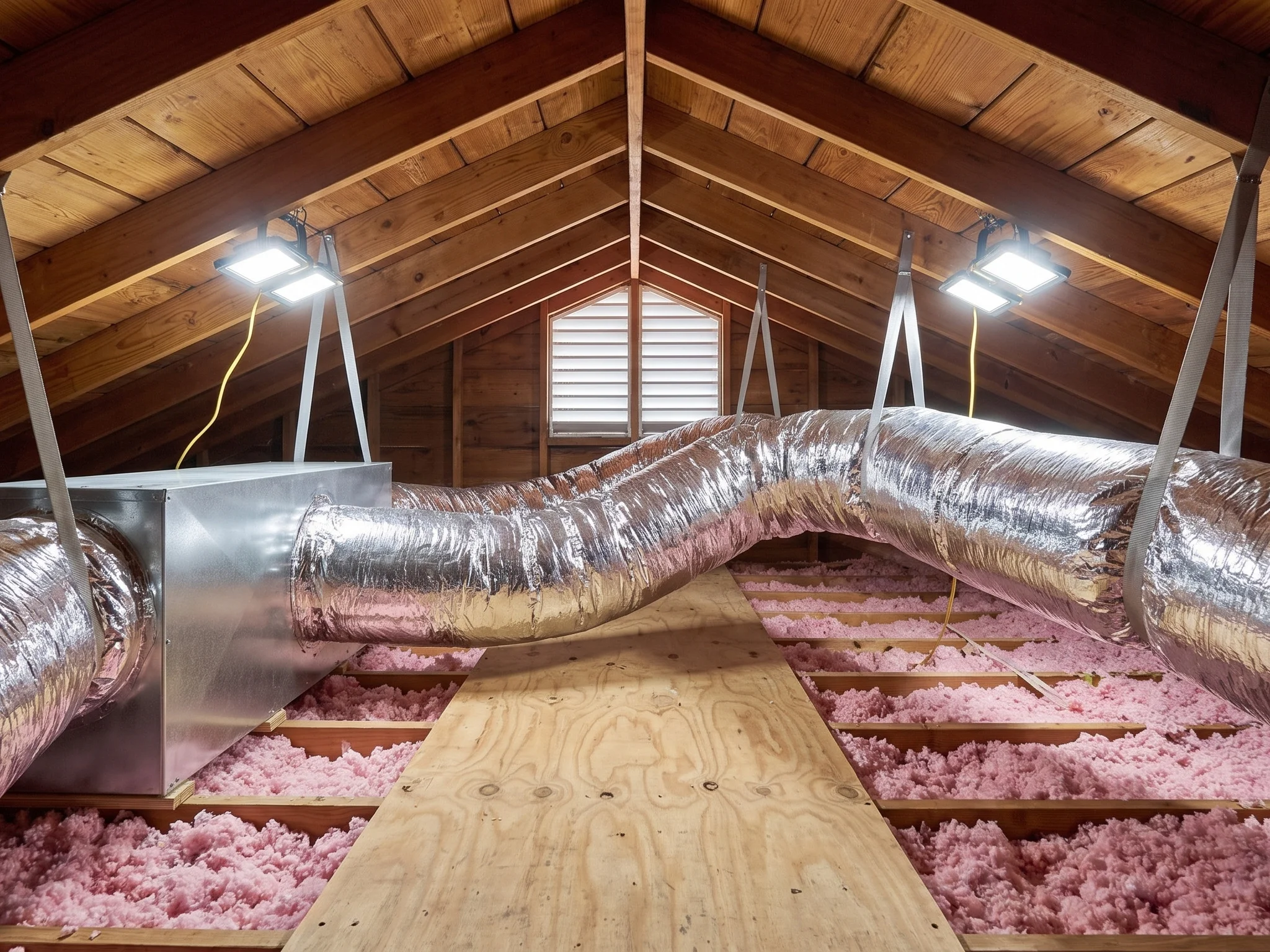
Ductwork replacement
Crushed, leaking, or undersized attic ducts are replaced with new insulated runs that we seal at every joint.
How a replacement goes
Every replacement follows the same four steps, from the first visit through the final inspection.
We look at the whole system
We come to your house before pricing anything and check the outdoor unit, indoor equipment, ducts, and electrical. We measure the house for a load calculation, the standard way to work out the system size it needs.
You get options in writing
We put options in writing, usually at more than one efficiency level. Each shows a matched outdoor and indoor pair, its efficiency rating, and its price. You can decline, and work starts only when you pick an option and sign.
Install day
The city permit is in place before we remove old equipment, recover refrigerant, set new units, and connect lines, drain, and wiring. A straight swap of both units on existing ducts usually takes one day, while duct work adds time.
Startup and walkthrough
We start the system and check the refrigerant charge and airflow, then show you the thermostat and filter. The city’s final inspection closes out the permit.

Repair it or replace it?
Plenty of AC failures call for a repair, such as a capacitor, a contactor, or a fan motor, and we’ll tell you when that’s the sensible call. When an older system needs a major part like a compressor or a coil, replacement usually makes more sense.
The system is past its expected life
A National Association of Home Builders study (2007) puts central AC units at 10 to 15 years and heat pumps at 16. Near or past those ages, a big failure makes a system a candidate for replacement.
It still runs on R-22
The EPA says U.S. production and import of R-22 refrigerant ended January 1, 2020. You can keep running an R-22 system, but a leak or major repair on one is hard to justify.
The repair bills keep coming
A common rule of thumb multiplies the system’s age by the repair cost. A result over $5,000 points toward replacement, as do repeat calls every summer on the same system.
Rooms that never cool down
Hot rooms, humidity, and high bills often come from sizing or ducts, so a new unit alone may leave the problem in place. We check the ducts before recommending one.
Guides for your replacement
Homeowners can find answers to common questions about replacing a system.
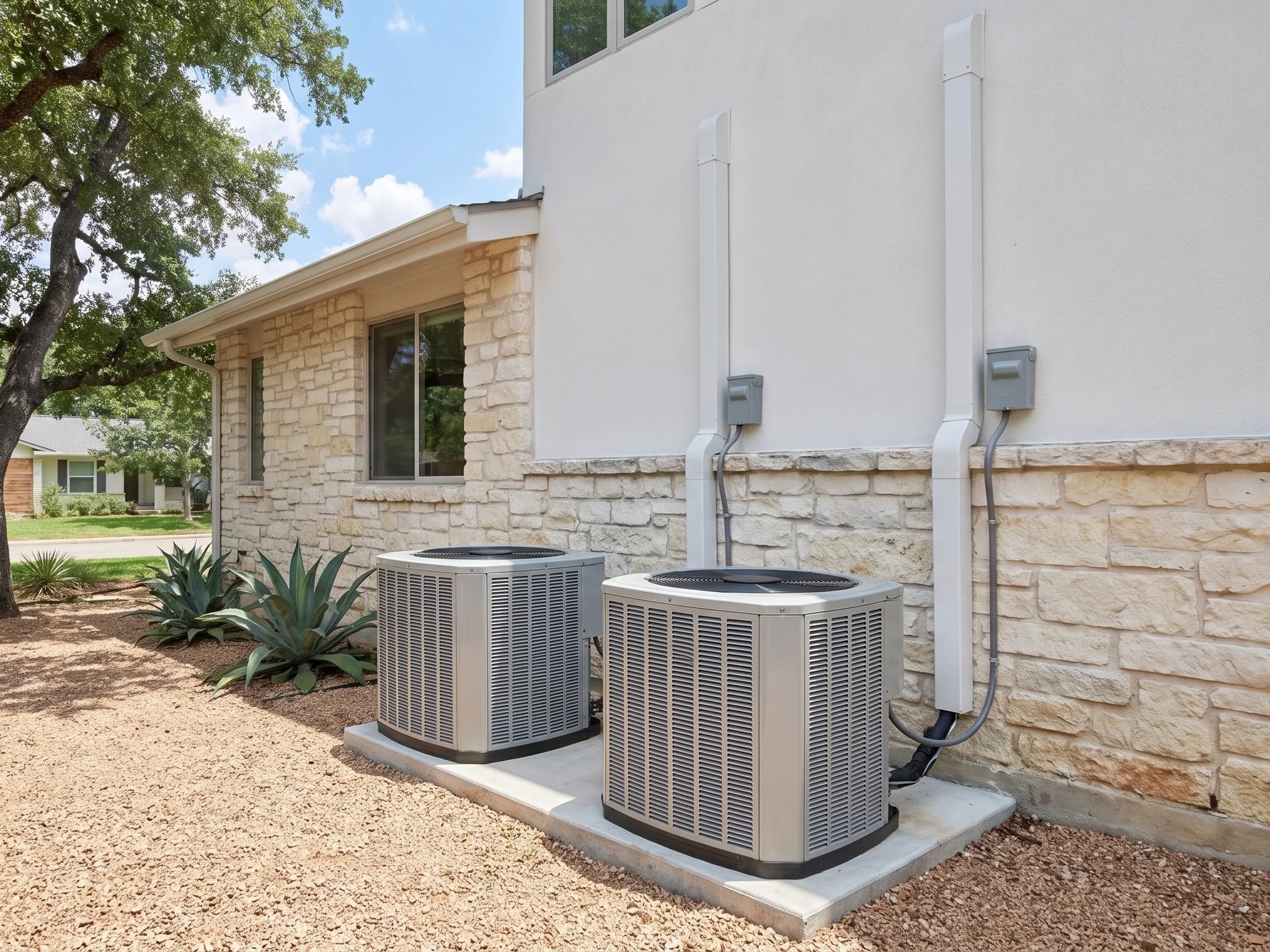
What AC replacement costs
Published price ranges show replacement costs in Austin and nationally, along with what pushes a quote up or down.
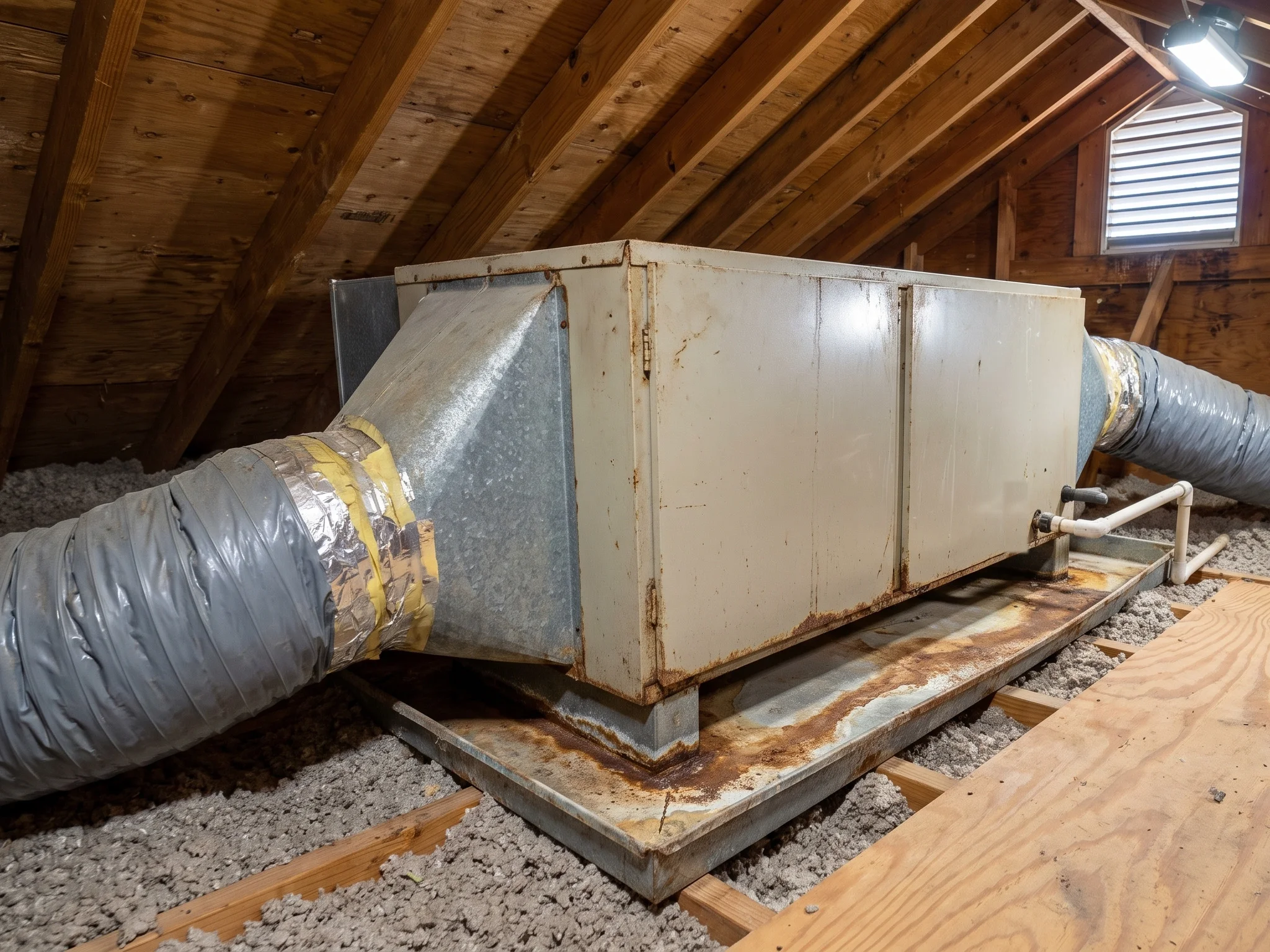
How long AC units last
Published lifespans for ACs, heat pumps, and furnaces come with signs that a system is near the end.
Repair or replace a failed compressor
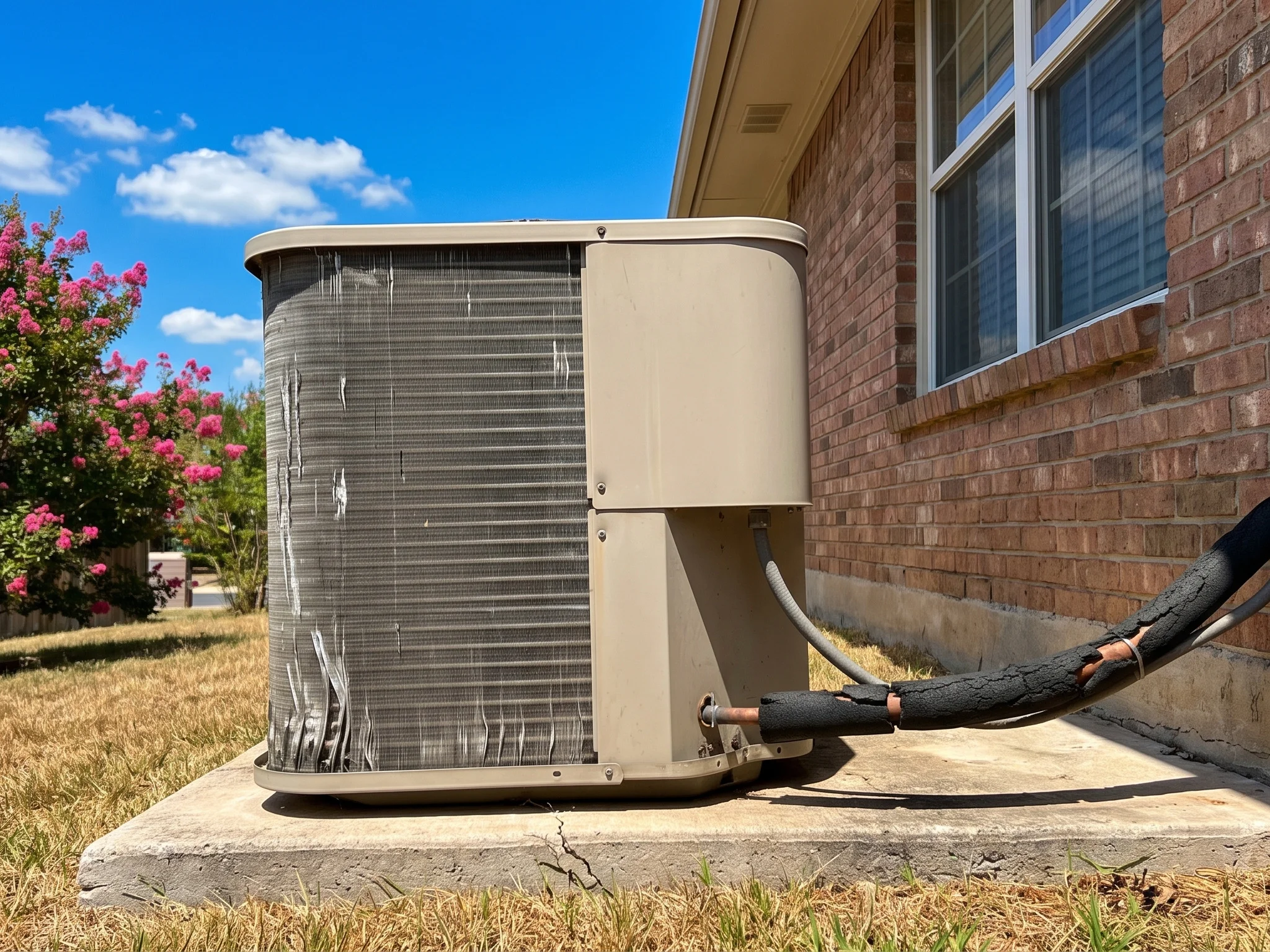
A failed compressor raises questions about its replacement cost and when replacing the whole outdoor unit or system makes more sense.

SEER2 ratings and the new refrigerants
Efficiency ratings and what they mean are explained alongside Texas minimums, the refrigerant change, sizing, and permits.

Austin Energy rebates
Austin Energy’s rebates for a new AC or heat pump show what it pays and who qualifies.

Where we work
We replace systems in Austin and the towns around it. Your electric utility and city permit rules vary from town to town, which changes the rebates you can get and the paperwork the job needs, so we check both for your address.
- Austin
- Round Rock
- Cedar Park
- Pflugerville
- Georgetown
- Leander
- Lakeway
- Bee Cave
- Kyle
- Buda
- Manor
- Dripping Springs
Common questions
How long does it take to replace an AC unit?
Swapping both the outdoor and indoor units on existing ducts usually takes most of a day. HomeGuide (2025) puts outdoor-plus-indoor replacement at 8 to 14 hours and jobs with ductwork changes at 2 to 3 days.
Do I need a permit to replace my AC in Austin?
Yes, an AC changeout inside Austin city limits needs a City of Austin mechanical change-out permit. The City issues it to a state-licensed contractor registered with the City or a qualifying homeowner, and the work gets a final inspection. Round Rock, Cedar Park, Pflugerville, and Georgetown have their own permits, covered in the permits section of the SEER2 guide.
Should I replace the indoor coil with the outdoor unit?
Yes, in most cases you should replace the indoor coil with the outdoor unit. AHRI, which certifies AC ratings, rates the indoor and outdoor units as a pair, so the efficiency rating only holds for a matched set. Newer R-454B outdoor units need an indoor coil approved for R-454B, and Austin Energy’s rebate requires the condenser, the furnace or air handler, and the coil all to be replaced.
Can I still buy a new R-410A system?
Yes, while supply lasts. An EPA rule effective July 27, 2026 lets R-410A systems built or imported before January 1, 2025 be installed until stock runs out. Systems made since January 1, 2025 use lower-impact refrigerants such as R-454B and R-32.
Are there rebates for a new AC in Austin?
Yes, Austin Energy customers can get $600 to $800 for a qualifying AC or $650 to $950 for a qualifying heat pump installed by an Austin Energy participating contractor. Texas Gas Service’s rebate program has expired, and the federal tax credit for heat pumps and ACs ended for systems installed after December 31, 2025. Our Austin Energy rebates guide covers who qualifies.